
A resort garden in the Maldives is built on coral sand, watered on an island, and exposed to salt on at least one side of every bed. It is a demanding brief, and it is a narrow one: the planting either belongs on a coral island or it does not last the first monsoon. This page sets out the softscape layer we supply for Maldivian schemes — shrubs, ground cover shrubs, ground covers, ornamental grasses and climbers — with a note against each line on where it will actually sit on the island.
The canopy comes off our own land at Suphan Buri, including species already established across the Maldives: Hibiscus tiliaceus, known there as dhiggaa, and Thespesia populnea, hirun’dhu. The layer beneath it comes through the growers we have worked with for years in the same Thai provinces, most of them specialists in two or three genera and nothing else. Trees and understorey are consolidated at the farm, loaded on the same programme and covered by one set of export documents, which on a Malé clearance matters more than it does almost anywhere else.
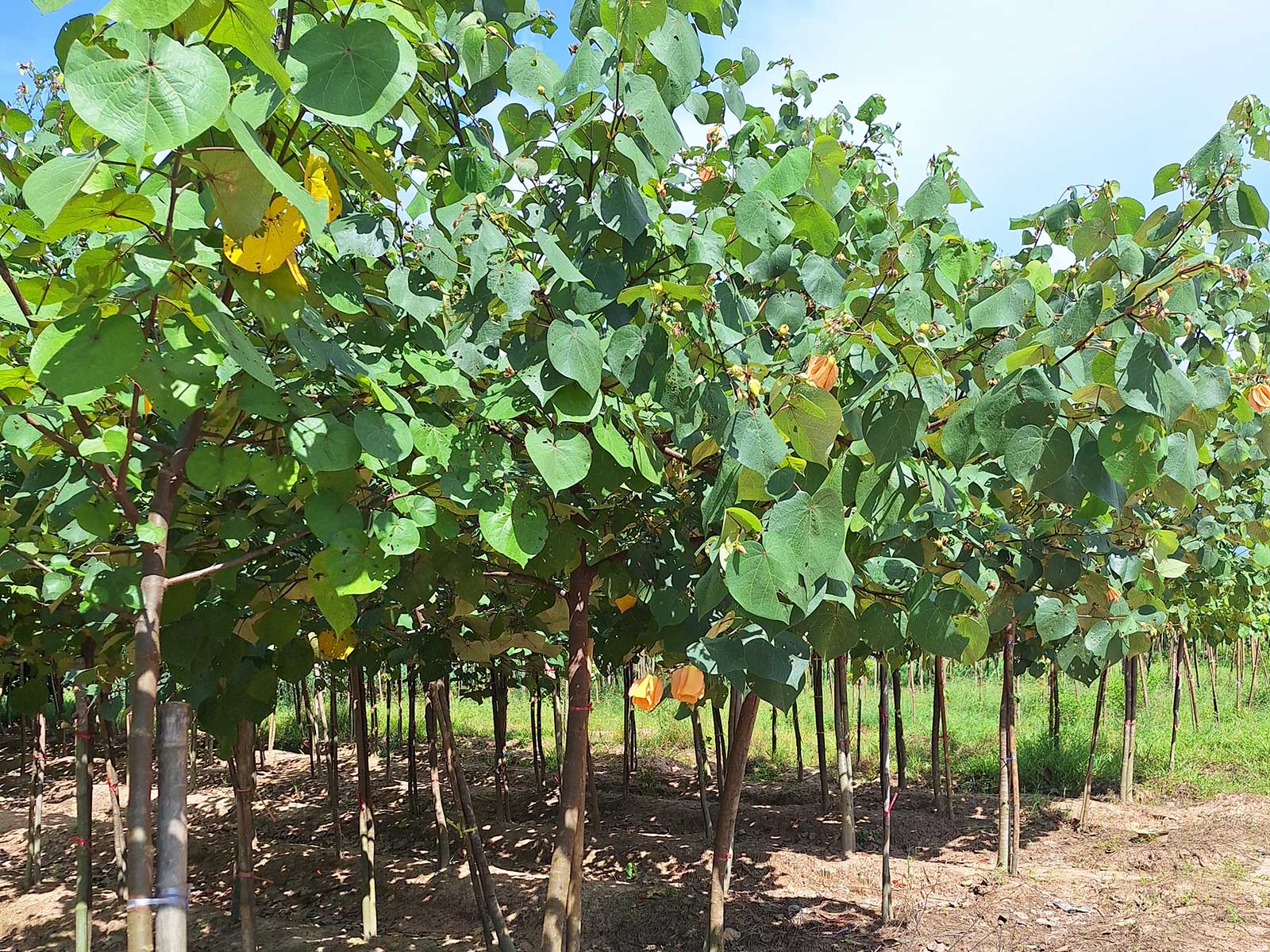
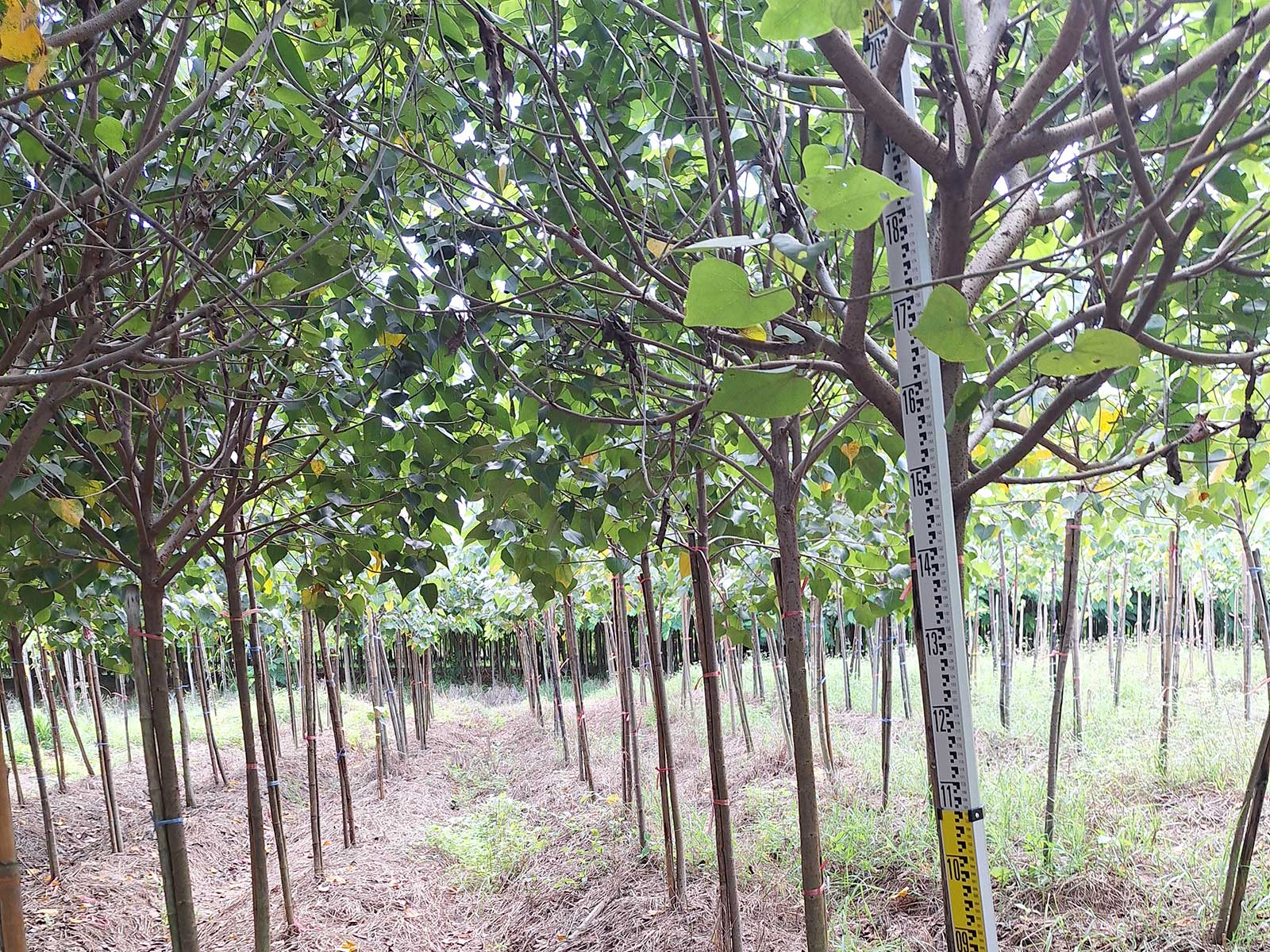
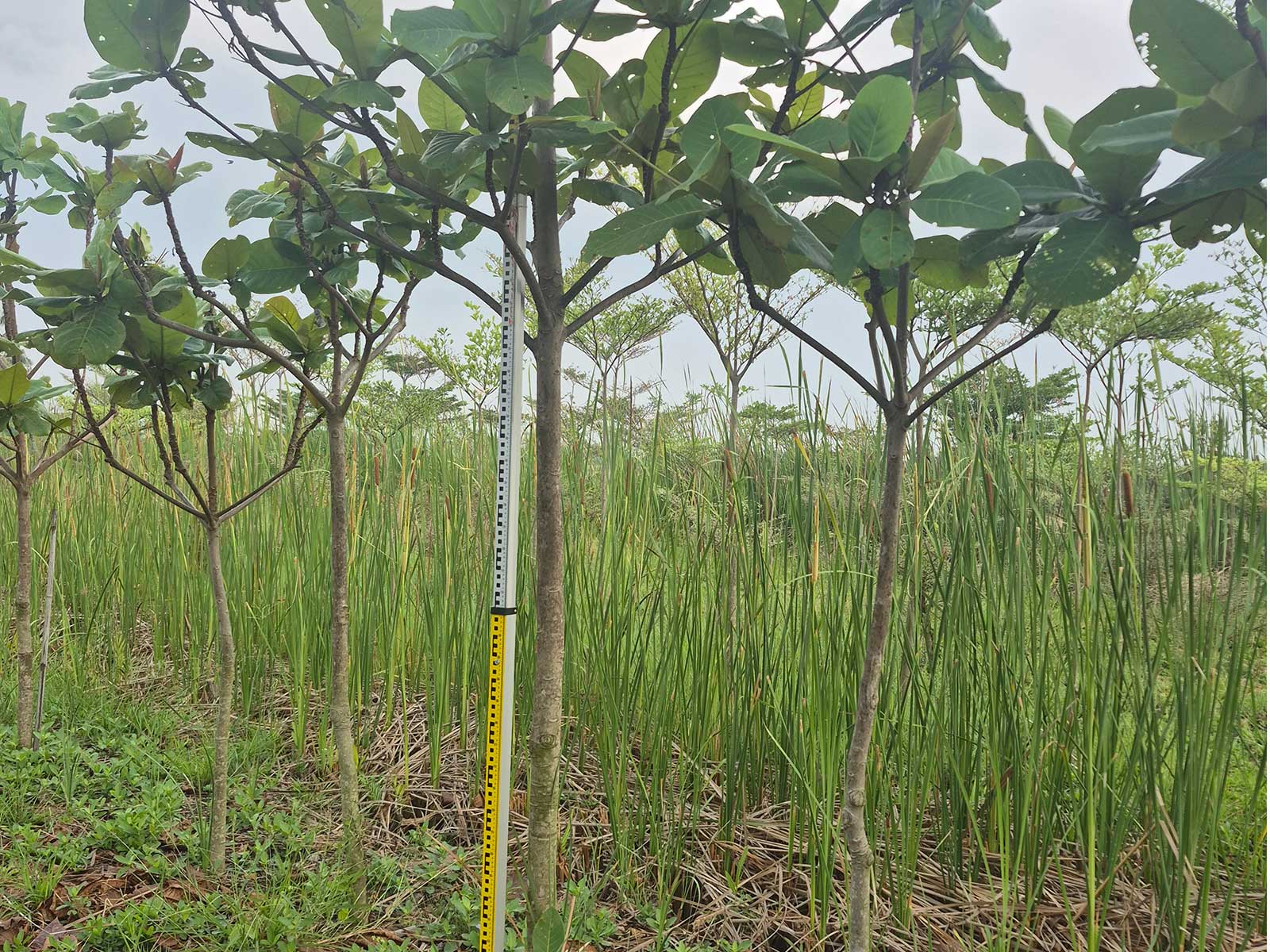
Three of the canopy species already growing across the Maldives, raised root-balled on our own land in Suphan Buri.
What an island planting plan has to survive
The published national plant guide puts it plainly: Maldivian flora is adapted to “infertile and saline soil, drought, flooding and salt spray”, in a warm humid climate with two monsoons. Coral sand holds almost no nutrient and almost no water, so plants are carried by irrigation and by whatever bed is made for them. Local practice is to build a planting bed rather than set a plant into flat ground, which stunts it.
Exposure is what kills, and it changes over a few metres. The line where beach sand meets island soil is the hardest position on the island: material that is fine forty metres inland burns off there within a season. Wind does the rest, shredding broad and soft foliage on the seaward side. So the useful question on a Maldives schedule is not whether a species grows in the tropics, but which of the three positions below it is being asked to hold.
- Beach crest and frontage. Full salt spray, wind, raw coral sand, and periodic flooding. Only genuinely coastal material holds here, and it is worth over-specifying rather than replanting every year.
- Second line. Behind the first planting or a building, filtered salt, full sun, irrigated. This is where most of the colour in a resort garden belongs.
- Sheltered interior. Villa courtyards, arrival areas, spa gardens and pool surrounds with wind protection and reliable irrigation. Soft foliage, scent and fine texture go here and nowhere else.
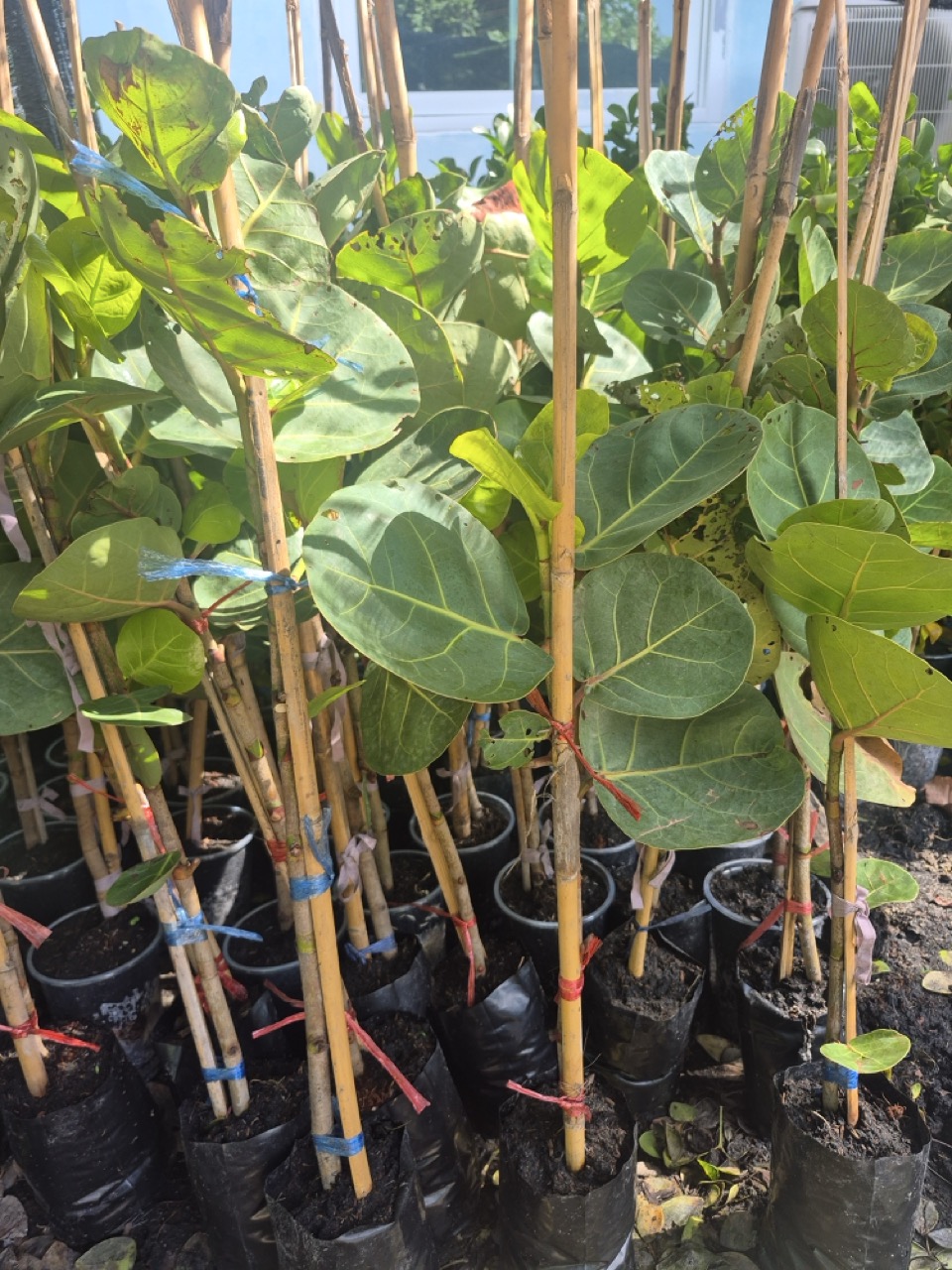
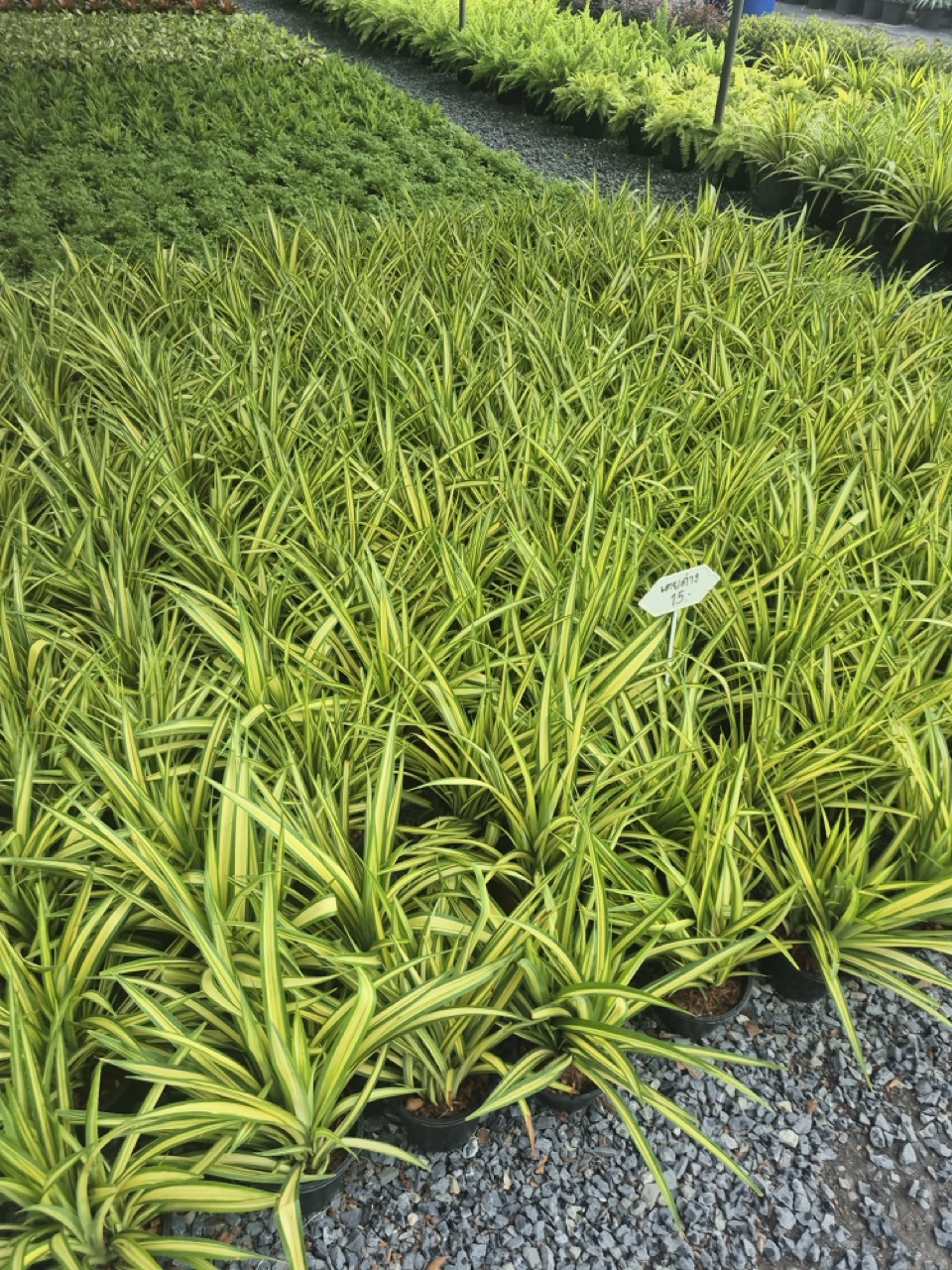
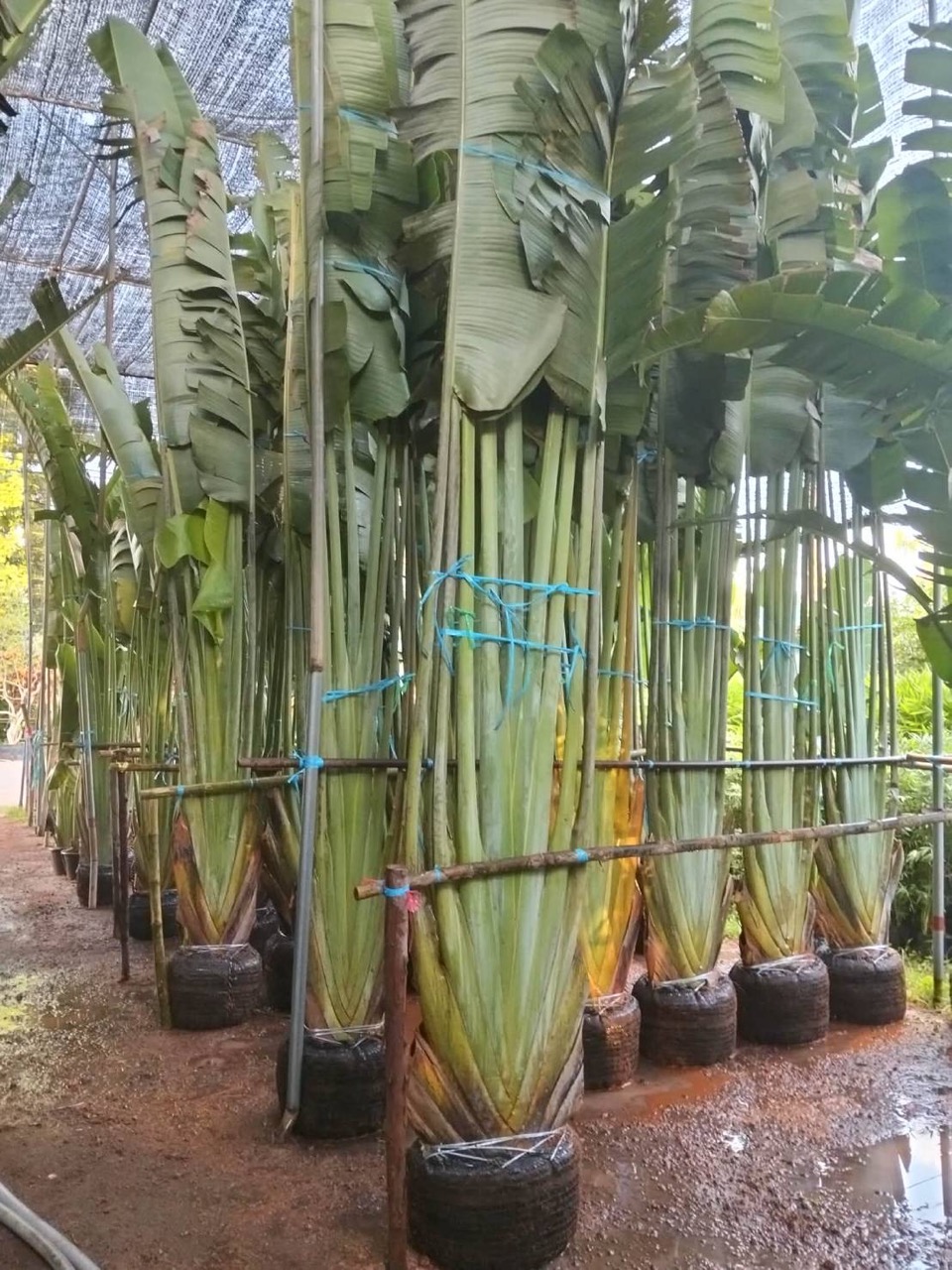
Shrubs, screening and accent planting
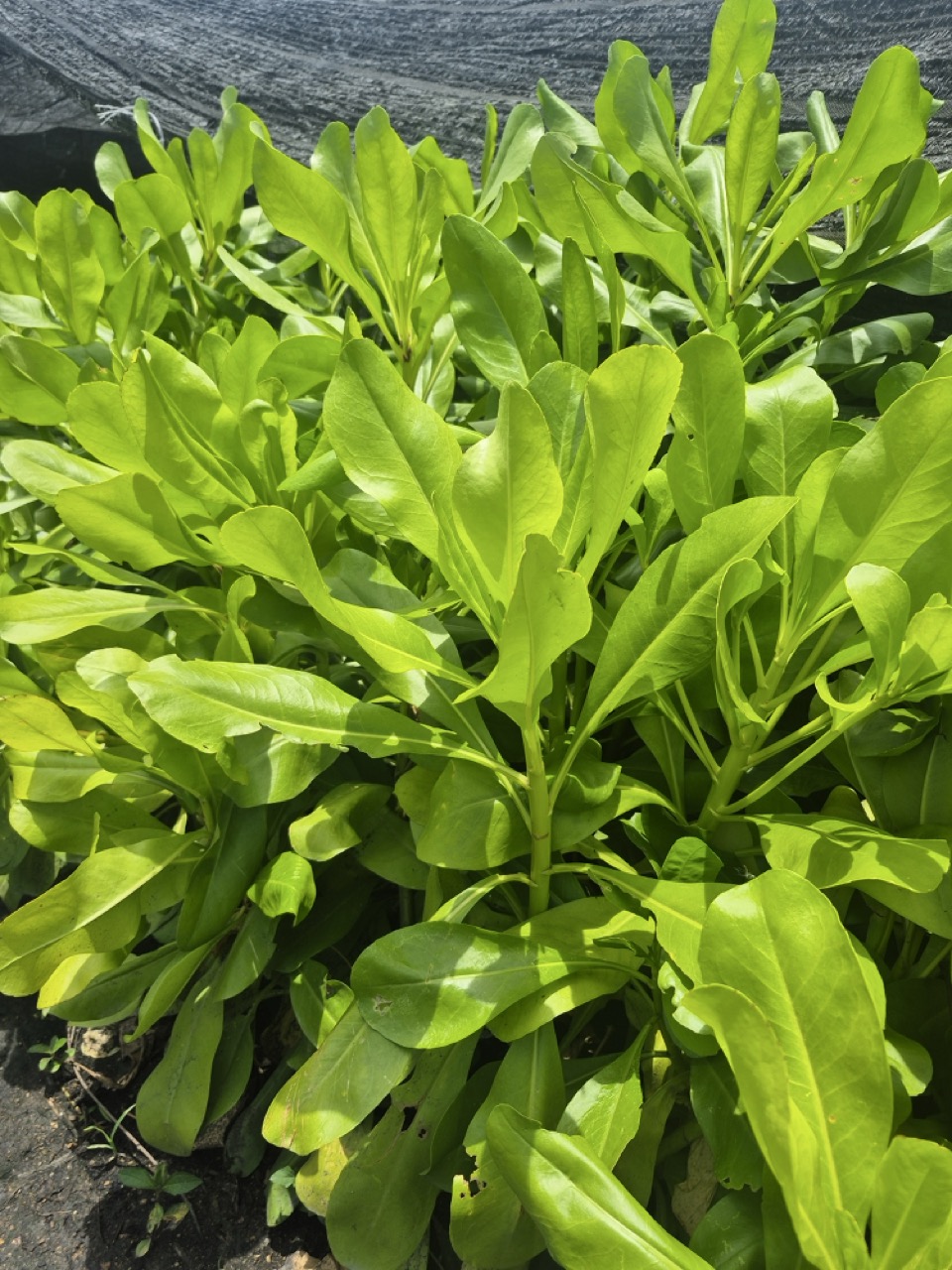
Upright material for hedging, screening, specimen positions and accent planting, with the island position it suits.
- Bambusa ventricosa — sheltered interior; foliage shreds in exposed wind.
- Bambusa vulgaris — interior screening and boundary planting, away from spray.
- Bougainvillea glabra — second line; sun and drought, but keep it off direct spray.
- Bougainvillea spectabilis — second line; the heavier of the two for walls and pergolas.
- Caesalpinia gilliesii — sheltered interior, sharp drainage; a dry-climate plant, not a frontage plant.
- Callistemon viminalis — second line; takes wind once established.
- Canna indica — sheltered interior, irrigated beds and courtyards.
- Clerodendrum inerme — beach crest; the standard salt-tolerant hedge, holds a clipped line on exposed frontage.
- Coccoloba uvifera — beach crest; salt and wind hardy, good as a frontage specimen or windbreak.
- Crinum asiaticum — beach crest; already common across the Maldives as maakan’dholhu.
- Cyperus alternifolius — sheltered interior; pond margins and water features, fresh water.
- Duranta erecta — second line; clipped hedging and low screens.
- Hymenocallis latifolia — beach crest; massed along the shore edge.
- Jatropha integerrima — second line; flowers continuously in full sun.
- Lawsonia inermis — second line; long established in the Maldives as heenaa, and takes clipping.
- Tabernaemontana divaricata — sheltered interior; filtered shade, scented, for courtyards and walkways.
- Tecoma stans — second line; fast colour, prune to keep it dense.
- Thevetia peruviana — second line; drought and wind hardy. All parts are toxic, so keep it away from children’s areas.
Ground cover shrubs
Low, spreading and cascading shrubs used massed rather than singly — bed fronts, slopes, coral edging, arrival islands and podium planters. On a schedule these come through as pot size and plants per square metre rather than as a height, so tell us the spacing you have designed to and the count follows from it.
- Catharanthus roseus — second line to frontage; sand, sun and salt tolerant, the workhorse of resort massing.
- Euphorbia milii — second line; hot, dry, sharply drained positions. Spined, so keep it off path edges.
- Ixora coccinea — second line; needs irrigation and feeding on coral sand, and repays both.
- Punica granatum ‘Nana’ — sheltered interior; low clipped edging.
- Ruellia ciliosa — second line; dry sunny massing.
- Russelia equisetiformis — second line; cascades over rock, coral edging and planter walls.
- Scaevola taccada — beach crest; native, waxy leaves shed spray, known locally as magoo.
- Vitex trifolia — beach crest; coastal massing that takes wind and spray.
Ground covers
- Asystasia gangetica ‘Variegata’ — sheltered interior; fast cover in shade and part sun.
- Sesuvium portulacastrum — beach crest; about the toughest cover there is for raw saline sand.
- Vitex rotundifolia — beach crest; spreading dune and beach cover.
Ornamental grasses and lawn
- Ophiopogon japonicus — sheltered interior; shaded edging and under-canopy cover, irrigated.
- Pennisetum setaceum — second line; dry exposed sun, movement in wind.
- Pennisetum setaceum ‘Rubrum’ — second line; the red-leaved form, same conditions.
- Pennisetum villosum — sheltered interior; softer texture for sunny beds out of the wind.
Climbers
- Jacquemontia pentantha — second line; light cover for trellis and fencing in full sun.
- Jasminum officinale — sheltered interior; scent beside terraces and walkways.
- Quisqualis indica — second line; vigorous pergola cover, give it a structure that can hold it.
- Trachelospermum jasminoides — sheltered interior; shaded walls and screens, scented.
Getting it into the Maldives
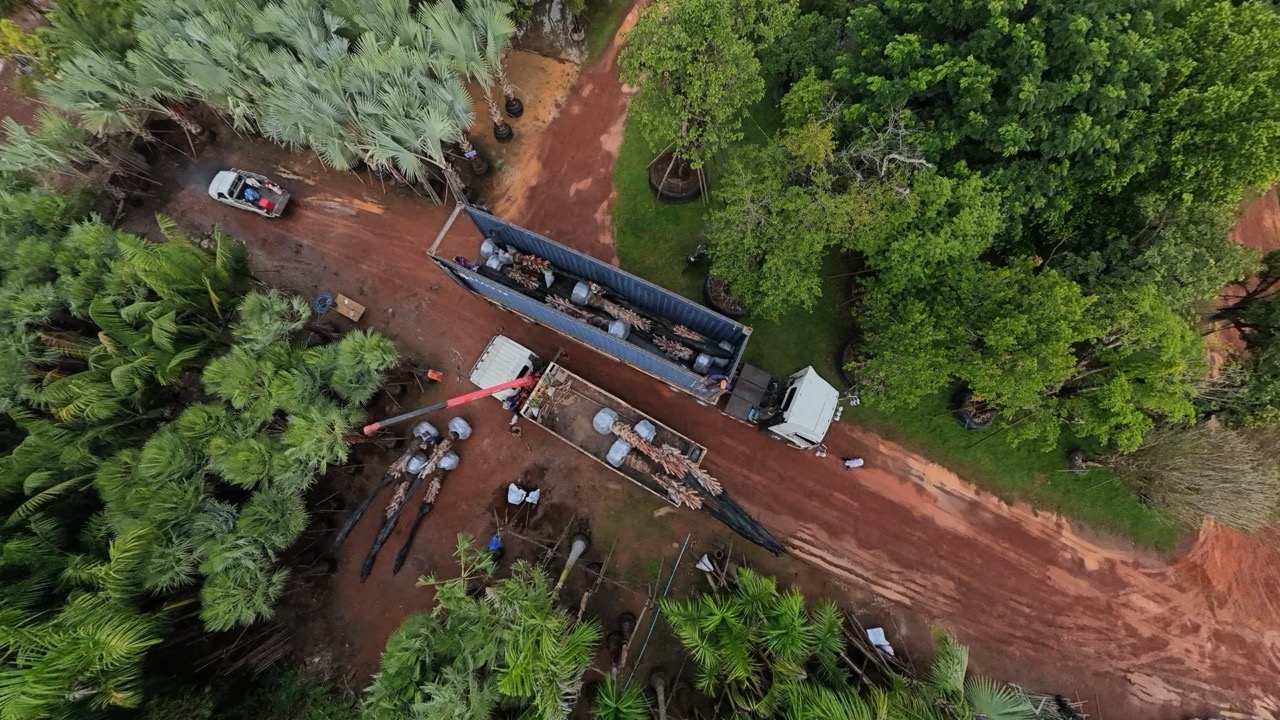
Maldivian plant import is stricter than most of the destinations we ship to, and the points below are the ones that decide a shipment. They are a summary of how the rules read, not advice: your permit and the Plant Protection Section govern, and we work to whatever they say.
- The permit comes first, and it lists the plants. The Ministry’s December 2025 notice to plant importers requires a valid Phytosanitary Import Permit before plants, plant products or regulated articles are brought in, and tells importers to check that the plant types they are importing are actually named on the permit they hold. So the schedule and the permit have to be reconciled before anything is lifted, not at the port. Send us the permit with the schedule.
- Arrival has to be reported. Every consignment must be reported to the Phytosanitary Inspector at the designated port of entry. Goods that arrive without a valid permit, are not presented for inspection, or breach the permit conditions may be quarantined and destroyed.
- Growing medium is the question to settle early. The Plant Quarantine Regulation requires imported material to be free of sand and water, and names perlite, vermiculite, cotton, peat moss and rock wool for packing roots. Coco peat, which is what our standard soil-free root ball is made up in, is not named in that list. Tell us what your permit allows and we will confirm what we can prepare before the order is placed — this is the single most common reason a tropical plant shipment is turned back, and it is entirely avoidable.
- Species that are new to the Maldives are treated differently. Plants not commonly found in the country fall under a separate route — a registered importer, technical material submitted in advance, and restrictions on moving the plants between islands afterwards. Specifying a palette already established in the Maldives, as most of the list above is, keeps a scheme out of that process altogether.
- Coconut is closed. All parts of Maldivian coconut palms other than timber are prohibited from import, so Cocos nucifera is not a line we can quote into the Maldives.
- Papers and packing. A phytosanitary certificate is issued in Thailand for the consignment, alongside the certificate of origin and treatment declaration. Wooden pallets and dunnage must be treated to the accepted international standard and documented — a detail that has delayed more shipments than the plants ever have.
A guide to the palette, not a limit on it
These are the names that come up most often on the island schedules we are asked to price, which is the only reason they are the ones written down. The network behind them is wider than the list, and most of what a resort scheme in this climate band specifies can be put together given reasonable notice.
Dry-palette species are the one place to ask before assuming either way. Some we can supply; others are grown here only as a curiosity and would be asked to do on a coral island what they were never raised to do. We will tell you which is which, and where the answer is no we would rather say so than sell you something that looks right on the drawing and fails in its first monsoon.
Send the planting schedule as it stands, with sizes, the island and your permit position, and it comes back marked line by line: what we grow, what the network supplies, what suits each exposure zone, and what is better left off the drawing. The tree catalogue covers the canopy, the full planting-layer list covers what we supply beyond the island palette, export and compliance covers the paperwork, and supply across Asia-Pacific covers how the shipping works from Thailand. Send us your schedule.